
A TV unit with cabinets and shelves gives you two kinds of storage in one piece. Open shelves display what you love. Closed doors hide what you don’t. The hard part is balancing the two. Too many doors make a room feel heavy, while too many open shelves invite clutter. This guide shows you how to find the right mix. It also features real designs from our collection.
Why a TV Unit With Cabinets and Shelves Works
Living rooms need to hide a lot. Game consoles, routers, cables, and remotes all gather around the TV. At the same time, most people want a place to show books, plants, or framed photos. A TV unit with cabinets and shelves handles both jobs. The doors keep the mess out of sight. The shelves keep the room feeling personal.
What Belongs Behind the Doors
Use the closed cabinets for things you reach for often but don’t want to see. That includes game consoles, spare controllers, chargers, cables, and remotes. Families with young children also use them for toys and board games.
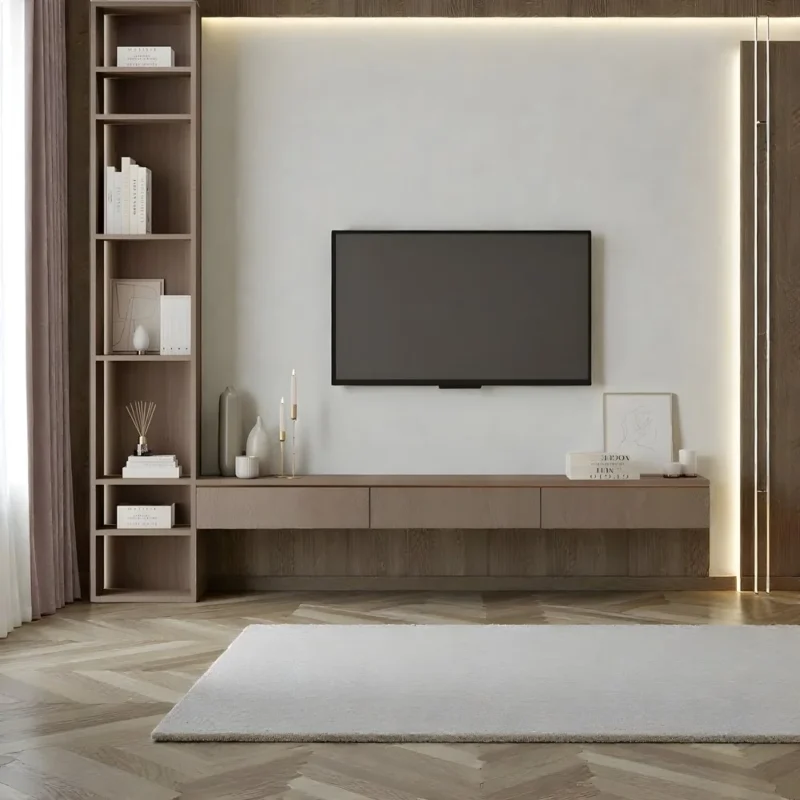
Good doors make this easier. The Sturdy TV Cabinet has four fluted doors with soft-close hinges, so they close quietly. The Elara Harmony Media Wall uses push-to-open doors and drawers, so the front stays clean with no handles.
What Belongs on the Open Shelves
Open shelves work best for things that look good. Think books, ceramic vases, small plants, candles, and framed art. Keep heavier items low and lighter décor higher.
The Elara Harmony Media Wall pairs a tall bookshelf tower with adjustable shelves. You can change the spacing as your collection grows. Leave some shelf space empty, too. A shelf packed edge to edge looks cluttered, not curated.
Plan for Airflow and Remote Signals
Electronics get warm, so give them room to breathe. Look for cable cut-outs or a gap at the back of the cabinet. This stops heat from building up behind closed doors.
Doors can also block remote signals. If your remote stops working, leave a door slightly open. You can also place the receiver on an open shelf. The Elara Harmony Media Wall includes discreet cable management, which keeps cords tidy and out of sight.
Finding the Right Balance for Your Room
Start with how you live. A busy family home needs more closed storage, because toys and cables pile up fast. A home with fewer items can use more open shelving. Room size matters too. A low console keeps the wall light and open. A tall wall unit adds storage and drama.
- More doors: busy family homes, lots of gear, and small children.
- More shelves: collectors, plant lovers, and people who style their space often.
- An even mix: most living rooms, especially if you want both display and hidden storage.
Choosing a TV Unit With Cabinets for a Small Living Room
Smaller rooms need shallow, low pieces. A depth of 40 cm keeps the walkway clear. The Carrington Mid-Century Modern TV Console and the Sturdy TV Cabinet both use it. Skip tall wall units unless you have a wide, free wall. Also check your TV’s width before you buy. The unit should be about as wide as the TV, or slightly wider. Measure the wall first, and then compare the numbers with the product dimensions. Our guide on how to measure for furniture explains the full process.
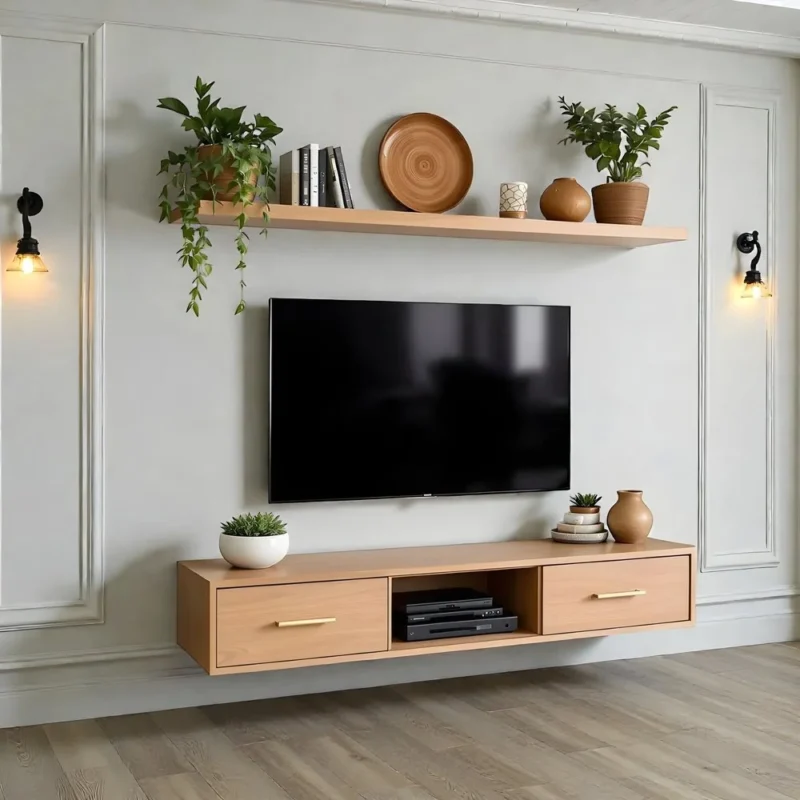
Real Designs at Coziness Home
These three designs show different ways to mix shelves and cabinets:
- Elara Harmony Media Wall — a complete wall unit. It has a tall open bookshelf tower and a low console with push-to-open doors and drawers. It is 200 cm wide and 220 cm high, in a warm taupe finish.
- Carrington Mid-Century Modern TV Console — open shelving and stylish cupboards in one low console. It is 175 cm wide, 40 cm deep, and 60 cm high. Choose dark grey, oak, or walnut.
- Sturdy TV Cabinet — four fluted doors with soft-close hinges and no open shelf, for a fully closed look. It is 200 cm wide, 40 cm deep, and 50 cm high, in matte beige.
Styling Tips for the Open Shelves
- Group items in threes, and vary their heights.
- Mix books standing up with books lying flat.
- Add one plant or vase for softness.
- Leave empty space, so the shelf can breathe.
- Keep cables off the shelves, and route them through the back.
Common Mistakes to Avoid
A few mistakes repeat often. People buy a unit narrower than the TV. They forget a cable plan, and cords end up hanging in view. Some fill every shelf, which makes the whole unit look busy. Others forget that hinged doors need room to open. Plan for each of these before you order, and the unit will work as well as it looks.
Your Checklist Before You Buy
- Measure the wall, and compare it with the unit’s width and height.
- Check the depth, and leave a clear walkway.
- Decide how many doors and shelves you need.
- Look for cable management and airflow.
- Think about how the doors open, and where your remote points.
- Match the finish to your floor and walls.
Frequently Asked Questions About a TV Unit With Cabinets
Should a TV unit have open shelves or closed doors?
Most living rooms work best with both. Doors hide devices and clutter, while shelves add display space and personality. The right mix depends on how much you store.
Do closed doors block the TV remote?
They can. Many remotes need a clear line to the receiver. Leave a door slightly open, or place the receiver on an open shelf.
How deep should a TV unit with cabinets be?
It must hold your TV stand and devices comfortably. Two of our designs, the Carrington console and the Sturdy cabinet, are 40 cm deep. Always check your TV’s base before you order.
Can I customize the size or finish?
Our TV cabinet range includes customizable options. Ask the team about size and finish, and share your wall measurements.
Final Thoughts
A TV unit with cabinets and shelves works best when you choose the balance on purpose. Use the doors for what you need but don’t want to see. Use the shelves for what you want to show. Measure carefully, plan for airflow, and leave some space empty. Browse the full TV Stand and Units collection at Coziness Home to find your mix.