
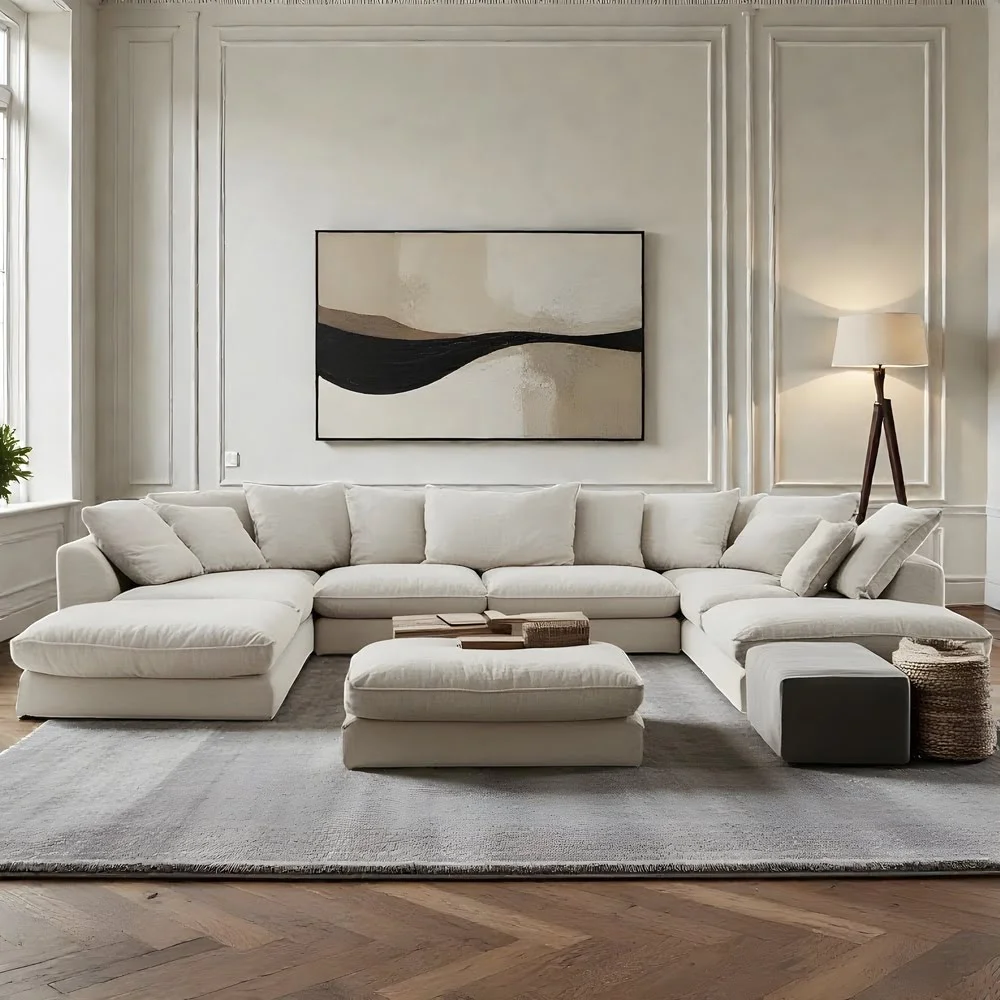
When it comes to furnishing your living space, few pieces are as important (and as impactful) as the sofa. It’s the place you relax after a long day, entertain guests, binge-watch your favorite shows, and create countless memories with family and friends. With so many styles and configurations available, choosing the right sofa can be both exciting and overwhelming.
In this in-depth guide, we’ll explore three of the most popular sofa styles — L-Shaped, Sectional, and Modular — and help you determine which one fits your lifestyle, space, and aesthetic perfectly. By the end of this blog, you’ll have a clear understanding of each style’s advantages, disadvantages, design compatibility, and how to choose the best one for your home.
1. Understanding Sofa Styles: An Overview
Before we dive into the details, let’s briefly define what sets each sofa type apart.
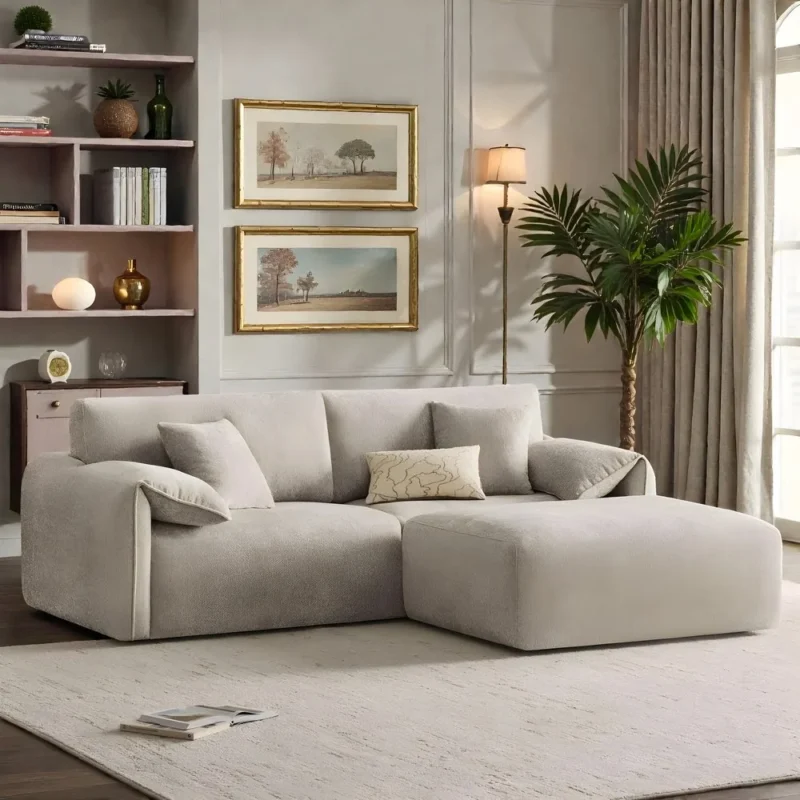
- L-Shaped Sofas: Fixed configuration sofas shaped like the letter “L.” They usually consist of two connected pieces — a sofa and a chaise — forming a right angle.
- Sectional Sofas: Larger sofas composed of multiple sections (typically 3+ seats) that are fixed in their arrangement but offer more seating than a standard sofa.
- Modular Sofas: Highly customizable systems with individual pieces that can be arranged and rearranged in various layouts over time.
Each of these sofa types brings distinct benefits and considerations. The ideal choice depends on your space, lifestyle, budget, and design preferences.
2. L-Shaped Sofas: Simple Yet Stylish
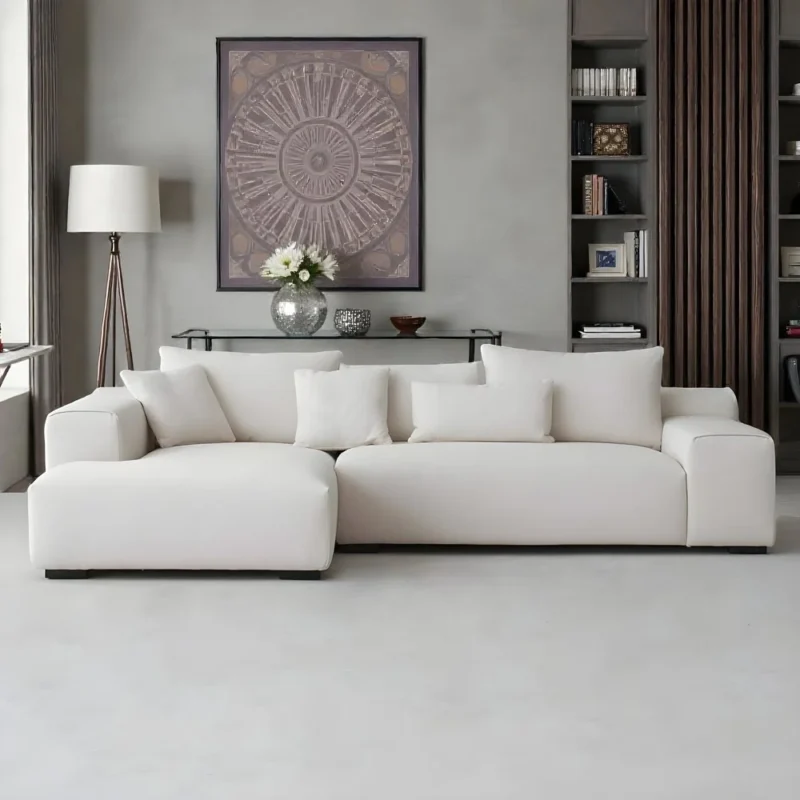
L-Shaped sofas are one of the most popular options for modern living rooms. Their fixed right-angle design creates a cozy corner that’s perfect for lounging.
Key Features
- Defined Shape: A permanent L-formation with a chaise on one side.
- Space Maximizing: Makes efficient use of available corner space.
- Single Unit: Typically purchased as one piece, which makes assembly and setup easier.
Advantages
Perfect for Corners
If you’re working with a smaller room or want to maximize your seating without overcrowding the space, an L-shaped sofa is ideal. By hugging the corner, it frees up the rest of the room for movement and additional furniture.
Clear Orientation
With a determined left or right chaise, you instantly know how the sofa will fit in your room. This can simplify planning.
Comfortable and Casual
The extended chaise provides a lounging area where you can stretch your legs without needing extra ottomans.
Great for Small Families
L-shaped sofas comfortably seat 3–5 people and can become the central gathering spot for TV time or conversation.
Drawbacks
Limited Flexibility
Once placed, the configuration can’t be changed without purchasing a new sofa. This can be restrictive if you like to rearrange often.
May Feel Too Big for Small Rooms
While corner efficient, an L-shaped sofa can overwhelm a tiny apartment or narrow room.
Chaise Side Restriction
If your room layout changes or you need to swap orientation, you may find yourself stuck with the current configuration.
Best For:
- Medium-to-large living rooms
- Homes that prefer traditional layouts
- Families who want comfort without frequent rearranging
3. Sectional Sofas: Versatile and Spacious
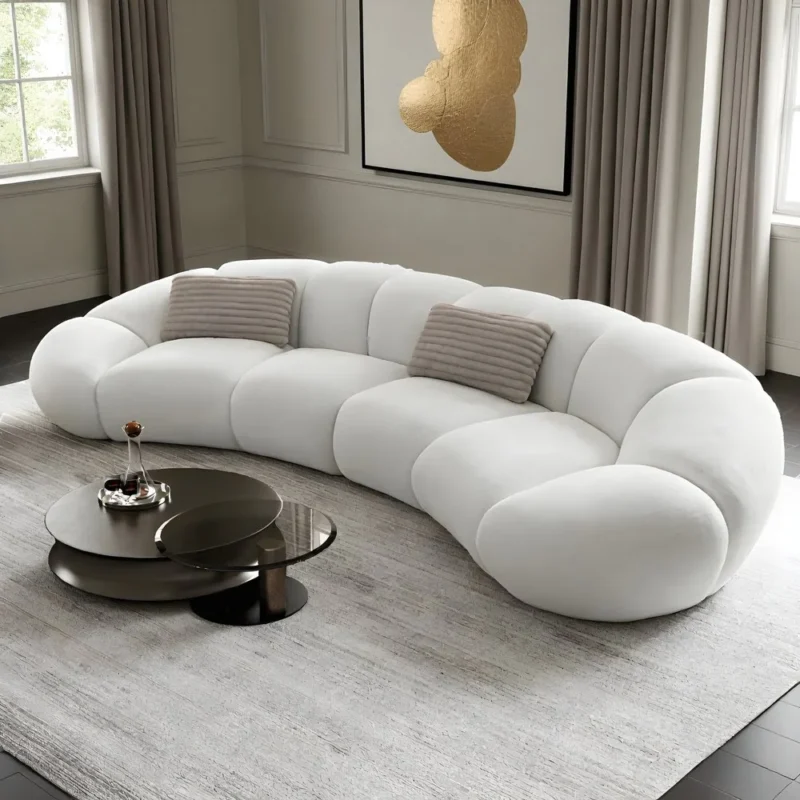
Sectional sofas are essentially larger, often U-shaped or extended configurations that provide significant seating area. They typically consist of multiple connected seating segments and sometimes include a chaise or corner unit.
Key Features
- Multiple Seating Units: Often includes corner pieces, chaise lounges, and sometimes sleeper functions.
- Fixed Layout: While larger than traditional sofas, their configuration is usually permanent.
- Social Seating: Great for families or roommates who want everyone to fit comfortably.
Advantages
Maximum Seating
Sectionals offer more seating than most traditional sofas — perfect for large families, avid entertainers, or open-plan spaces.
Cozy and Communal
With a wraparound feel, sectionals create a communal space where people can easily interact face-to-face.
Design Impact
A well-chosen sectional becomes the focal point of your living area, anchoring the space with style and presence.
Options for Sleepers
Many sectionals come with built-in sleeper beds or reclining elements — ideal for guest-ready homes.
Drawbacks
Bulkier Footprint
Sectionals require more floor space. In smaller rooms, they can make the area feel enclosed or overcrowded.
Difficult to Move
Due to their size, moving a sectional (especially through doorways or tight halls) can be challenging.
Less Flexible
Once placed, you’re committed to that configuration — which may be limiting if you like redesigning often.
Costly
Larger size and premium materials often means a higher price tag than simple configurations.
Best For:
- Large living rooms or open-plan spaces
- Families who entertain often
- People who want extra functionality (like sleepers or recliners)
4. Modular Sofas: The Ultimate in Customization
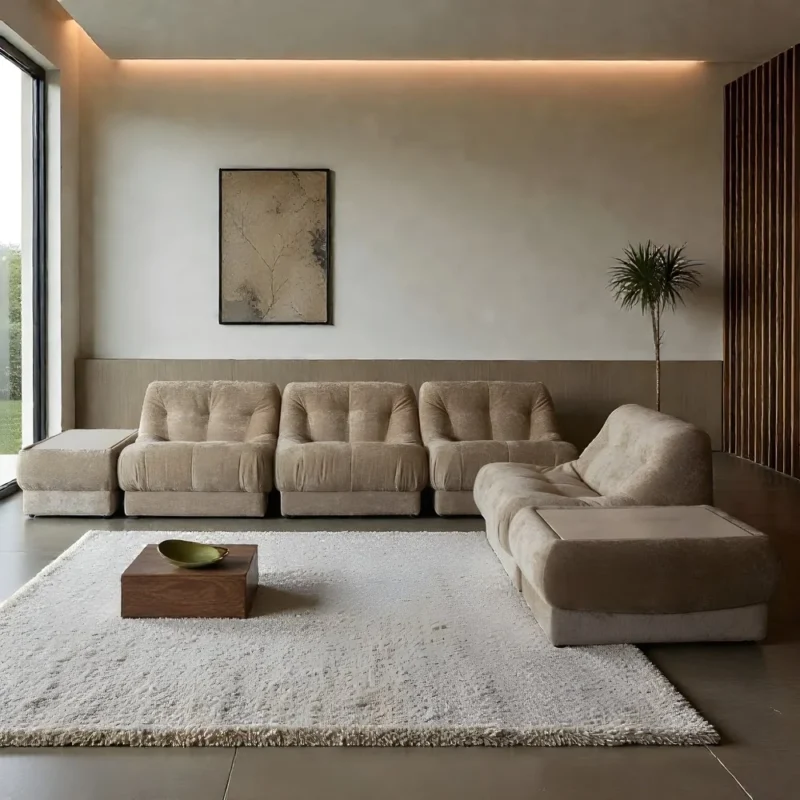
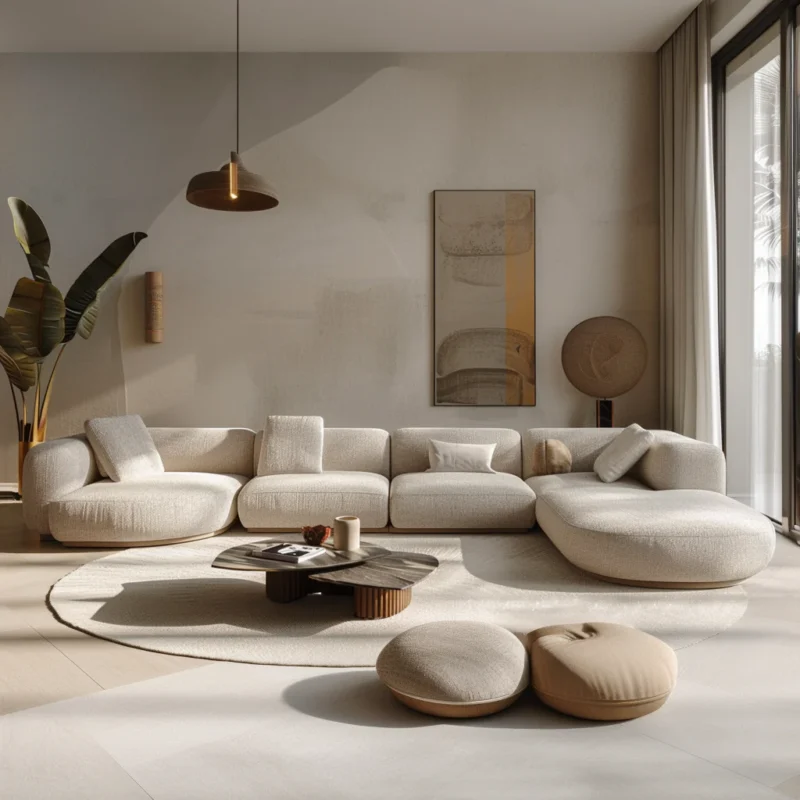
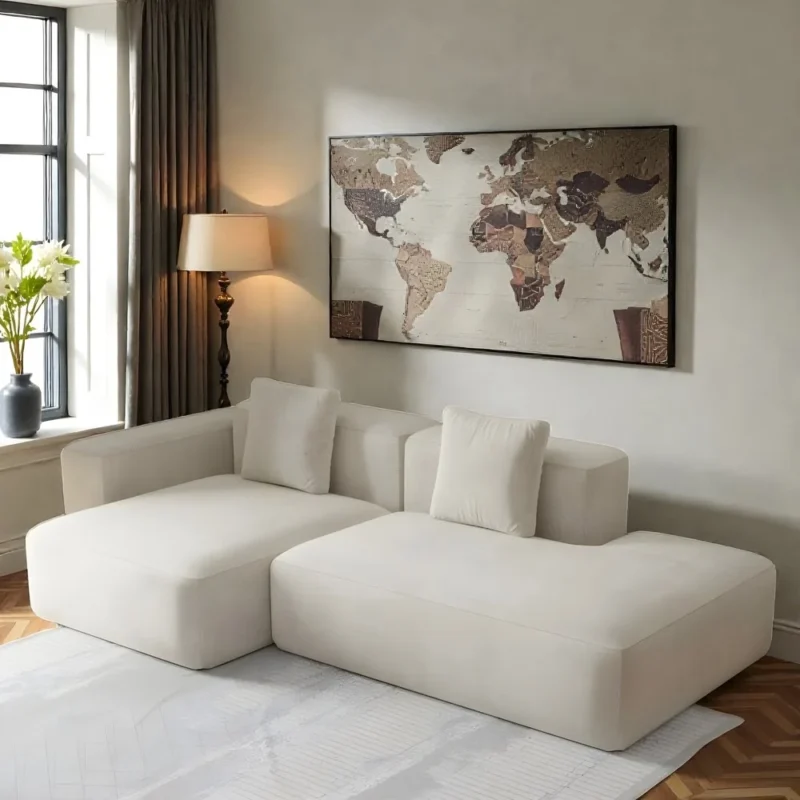
Modular sofas are like the “Lego” of the sofa world — a collection of individual pieces that you can mix and match to create endless configurations. Want a chaise today and two loveseats tomorrow? Modular sofas let you do exactly that.
Key Features
- Separate Units: Individual pieces such as armless seats, corner units, ottomans, sliders, and chaises.
- Completely Customizable: Rearrange pieces anytime.
- Expandable: Add pieces over time as needs change.
Advantages
Ultimate Flexibility
Reconfigure your seating based on your needs — from a long straight sofa to an L-shape, U-shape, or even separate seating zones.
Adaptable to Your Space
Moving to a new house? Simply rearrange your pieces to suit the new floor plan.
Mix & Match Materials
Some modular systems let you choose different fabrics or colors for individual pieces — ideal for creative interior design.
Grow With You
As your family expands or seating needs change, simply add more segments.
Drawbacks
Can Feel Less Unified
Because each piece is independent, modular sofas can sometimes look less cohesive than traditional sofas unless styled carefully.
Higher Cost
Modular systems tend to cost more due to the customization and individual piece engineering.
More Decisions
While flexibility is great, some people find the amount of choice overwhelming when configuring their setup.
Potential for Gaps
Without careful planning, some configurations may create gaps or less ergonomic arrangements.
Best For:
- Creative, design-minded homeowners
- People who like to rearrange often
- Those planning to grow or change living spaces
5. Sofa Size & Space: Planning Before You Buy
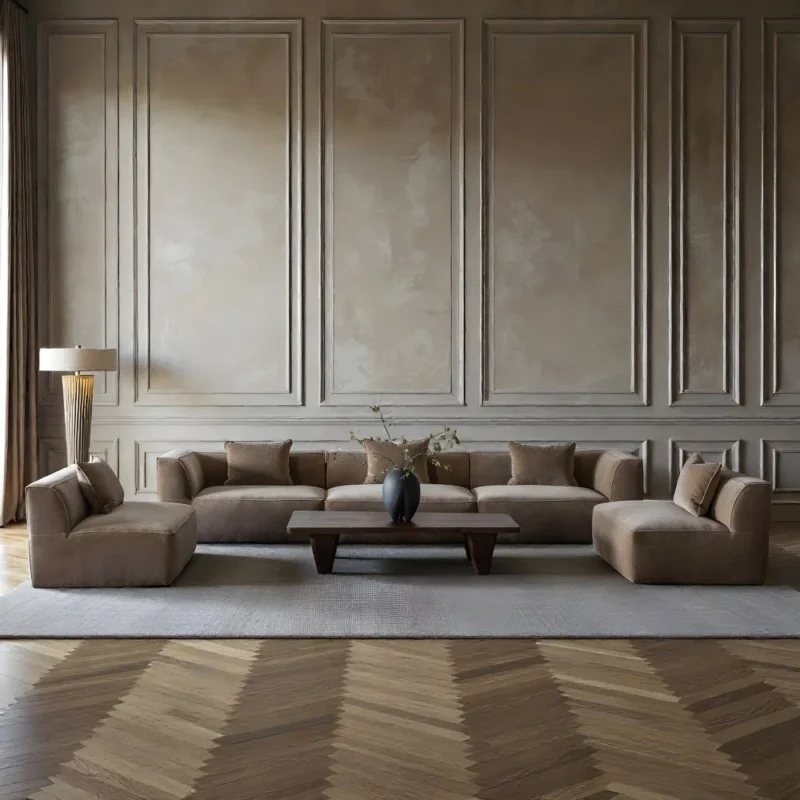
Selecting between L-shaped, sectional, or modular goes beyond style — measurements matter. Here’s how to decide what fits best.
Measure Your Room
Use a tape measure and floor plan to determine:
- Total Floor Space: Calculate the exact dimensions of your room.
- Pathways: Identify walking paths and avoid blocking doorways.
- Focal Points: Note window walls, TV placement, and fireplaces.
- Ceiling Height: Taller sofas can make low ceilings feel smaller.
Visualize Before Buying
Sketch your room on graph paper or use online room planners. Mark out where furniture will go. This helps avoid mistakes like buying a sofa that’s too deep or too long.
Consider Traffic Flow
Your sofa should allow for smooth movement around the room. If the chaise blocks a major path, consider a shorter option or a more flexible modular setup.
6. Comfort: What Really Matters
Style and space are important, but comfort is king. Here’s what to evaluate:
Seat Depth & Height
- Deeper Seats: Great for lounging and tall individuals.
- Shallower Seats: Better for formal seating or shorter people.
- Seat Height: Standard is 17–19 inches — consider your height and how you sit.
Cushion Fillings
- Foam: Supports shape and firmness
- Feather/Fiber: Softer feel but may require fluffing
- Hybrid: Combines foam core with soft tops for balance
Upholstery Choices
- Fabric: Cozy and versatile
- Leather: Durable and sleek
- Performance Fabric: Great for homes with kids or pets
Back Support
Higher backs offer better support but may overwhelm small rooms. Lower backs look modern but may feel less cozy for long lounging.
7. Style & Aesthetics: Making It Yours
Your sofa should reflect your personal taste and interior aesthetic. Here’s how to align your style:
Classic & Timeless
Neutral colors, tapered legs, and simple lines work well with L-shaped or modular sofas.
Modern & Minimal
Clean lines, low profiles, and monochrome upholstery enhance sectionals and modular layouts.
Eclectic & Creative
Pair modular pieces with contrasting fabrics or accent chairs to make a bold statement.
8. Budget Considerations
Here’s a quick comparison of typical price expectations:
- L-Shaped Sofas: Generally mid-range pricing — offers great value if you don’t need customization.
- Sectional Sofas: Can range from mid to premium, depending on size and features.
- Modular Sofas: Usually premium due to flexibility and customization options.
Always factor in delivery, assembly, and extra accessories like throw pillows or ottomans.
9. Lifestyle Fit: Key Questions to Ask Yourself
Before making a decision, answer these:
- How often do I rearrange my room?
If frequently — go modular. If rarely — L-shaped or sectional can work fine.
- Do I entertain often?
Sectionals provide maximum seating; modular allows tailored guest spaces.
- Do I move homes in the near future?
Modular adapts to new layouts; fixed sofas can feel limiting.
- Do I have kids or pets?
Comfortable performance fabrics and modular versatility are ideal.
- What’s the focal point of my room?
If you want a statement piece, a well-chosen sectional can dominate the space.
10. Final Verdict: Which Sofa is Right for You?
Here’s a quick summary to help you decide:
| Sofa type | best for | drawbacks |
|---|---|---|
| L-Shaped | Defined corners, casual lounging | Fixed orientation, less flexible |
| Sectional | Maximum seating & social spaces | Bulky footprint, higher cost |
| Modular | Custom configurations & adaptability | Higher cost, more choices |
Choose L-Shaped If:
✔ You want simplicity
✔ Your room has a defined corner
✔ You don’t rearrange often
Choose Sectional If:
✔ You host frequently
✔ You want lots of seating
✔ You have a large living space
Choose Modular If:
✔ You value flexibility
✔ You like changing layouts
✔ You enjoy customizing your décor
Conclusion
Choosing the right sofa is a blend of function, comfort, and style. Whether you opt for the cozy embrace of an L-shaped sofa, the expansive seating of a sectional, or the customizable freedom of a modular design, the best choice is the one that enhances your space and lifestyle.
At Coziness Home Furniture, we believe your sofa should be more than just furniture — it should be a centerpiece that reflects your personality and supports daily life beautifully. Use this guide to make an informed choice that you’ll enjoy for years to come!